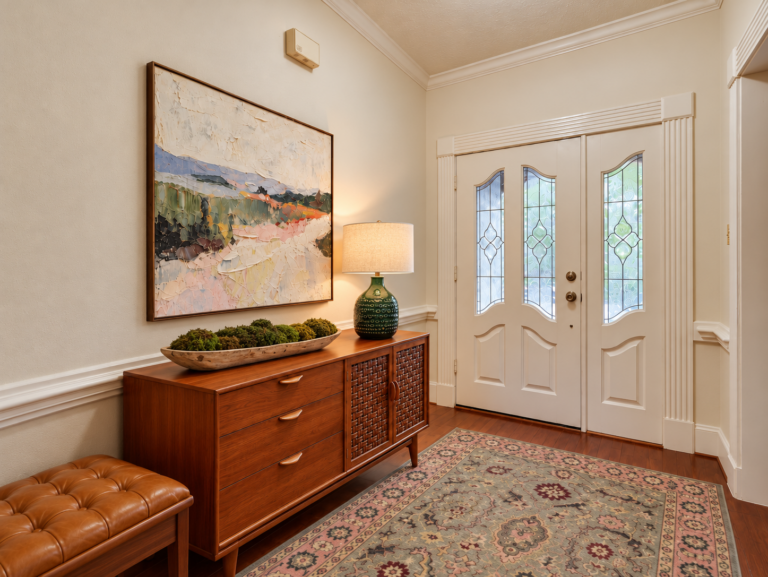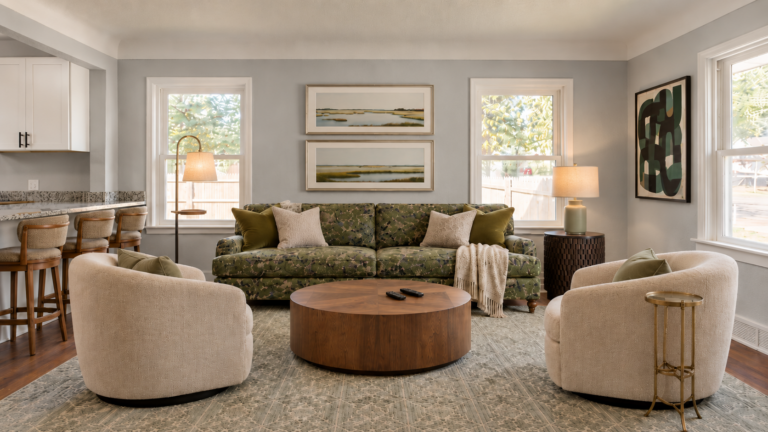
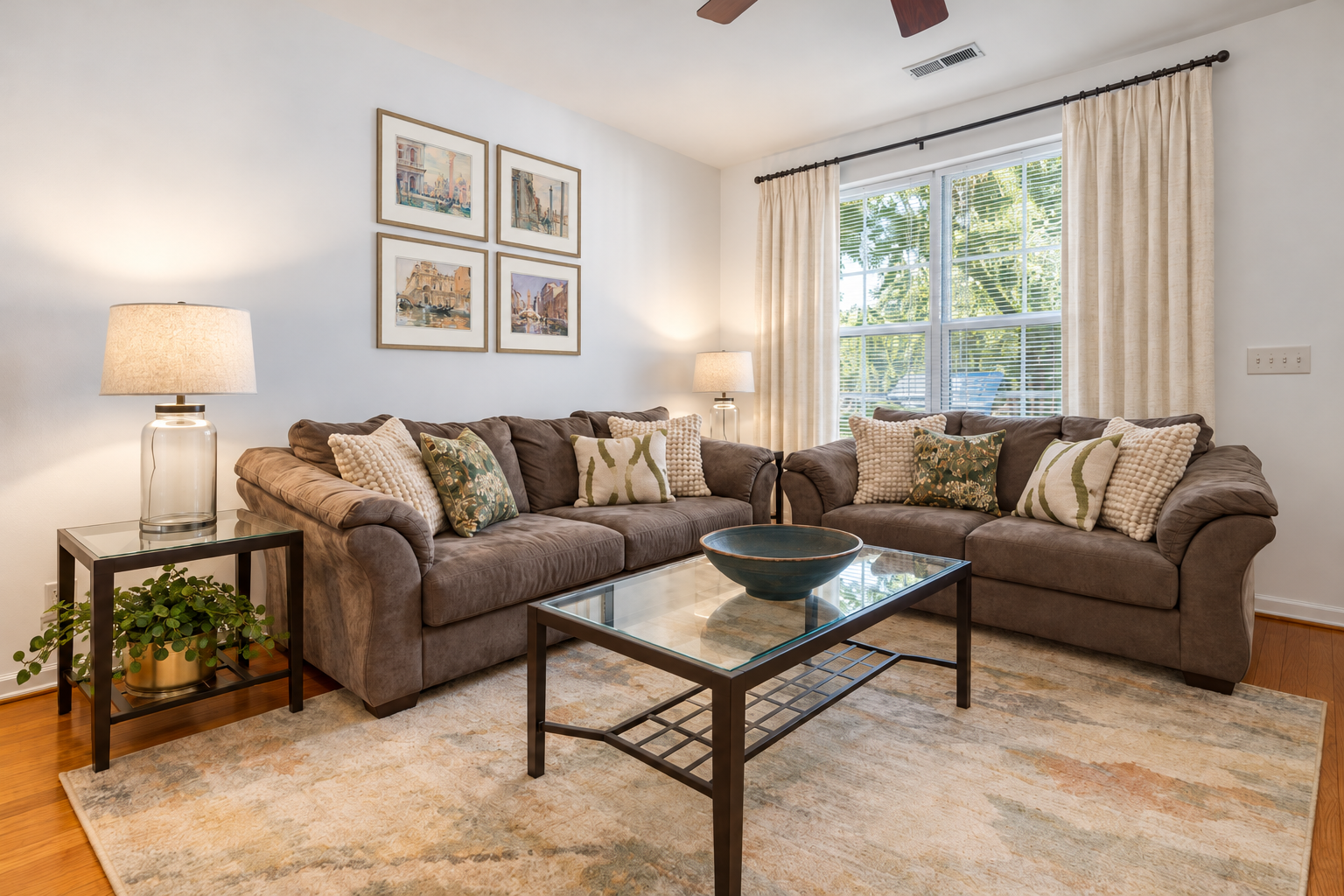
The Home Staging Checklist (and What It Can’t Tell You)
A home staging checklist tells you what to do. It can’t show you what your rooms should look like when you’re done. Below is the checklist, plus the part most checklists leave out.
If you’re getting ready to sell, you’ve probably seen the standard advice: declutter, depersonalize, remove extra furniture, paint neutral, clear the counters, let in more light.
It’s good advice, and we’ve included a complete room-by-room version below. But a checklist has a blind spot. It tells you what to remove. It doesn’t tell you how to arrange what’s left, what’s worth keeping, or what the finished room should look like in a listing photo. And that photo is where most buyers will meet your home first.
Listing photographs matter
Of buyers who used the internet in their search, 83% rated property photographs as very useful.
Source: National Association of Realtors, 2025 Home Buyers and Sellers Generational Trends, p. 56.
The Home Staging Checklist, Room by Room
Start here. These are the basics nearly every house needs before photography day.
Throughout the house
- Clear out clutter: stacks of mail, excess decor, small appliances, cords, and anything stored in plain sight.
- Edit personal items. Keep a few meaningful pieces; pack away most family photos, collections, and memorabilia.
- Deep clean floors, windows, baseboards, light fixtures, and switch plates.
- Make small repairs: sticking doors, loose hardware, burnt-out bulbs, chipped paint, dripping faucets.
- Use consistent bulb color throughout so rooms don’t photograph half yellow, half blue.
- Open blinds and curtains fully, and clean the glass.
Entry
- Clear shoes, coats, bags, and keys from view.
- Add one welcoming element: a runner, a mirror, a small table with a lamp.
Living room
- Arrange furniture to emphasize the room’s focal point and create comfortable circulation.
- Make sure walkways are clear and the fireplace, windows, or view aren’t blocked.
- Simplify the coffee table and mantel to a few well-chosen objects.
- Hide remotes, gaming gear, and visible cords.
Kitchen
- Clear counters down to one or two items.
- Remove magnets, papers, and photos from the refrigerator.
- Hide dish soap, sponges, towels, trash cans, and pet bowls for photos.
- Organize the pantry and cabinets. Buyers open them.
Dining room
- Remove extra leaves and extra chairs so the room feels open.
- Use a simple centerpiece instead of a full table setting.
Bedrooms
- Make beds with crisp, simple bedding and two to four pillows.
- Clear nightstands and dressers.
- Pare closets down so they look roomy.
- Return any room used for storage or exercise to a clear purpose.
Bathrooms
- Remove toiletries, razors, and bath mats from view.
- Hang fresh, matching towels. Close the toilet lid.
- Replace dated or stained shower curtains.
Exterior
- Mow, edge, weed, and trim shrubs away from windows.
- Clean the front door and hardware; consider a new doormat and potted plants.
- Put away hoses, toys, tools, and trash bins.
The day before photos
- Turn on every light, including lamps and under-cabinet lights.
- Move cars out of the driveway and pets out of the house.
- Walk each room from the doorway and look at it the way a camera will.
That last item is the hardest one, and it’s where checklists stop being enough.
What a Home Staging Checklist Can’t Tell You
Take the instruction to remove extra furniture. Which furniture? Should the loveseat go, or move to another wall? Is the room crowded because there’s too much in it, or because what’s in it is poorly arranged?
Or take “paint neutral.” Maybe your dining room’s deep wall color is exactly what gives it character. Maybe the living room would look completely different with a lighter rug and better lighting, without touching the walls at all.
Guessing wrong costs real money, especially when the guesses involve paint, new furniture, or movers.
There’s a second problem. Follow a checklist too literally, and you can strip the life out of a room. Take down the art, pack the collections, clear every surface, neutralize every color, and what’s left is often a clean, anonymous room nobody remembers.
An antique chest, a good piece of pottery, a distinctive painting, an interesting wall color: these can be exactly what makes a room appealing. The goal isn’t to erase personality. It’s to create a home buyers find inviting and can imagine as their own.
Decluttering removes distractions.
Designing creates desire.
The skill is knowing what to keep, what to edit, and how to make it all work together.
Your Home Makes Two First Impressions
The first happens on a screen, as buyers scroll photos, compare homes, and decide which ones are worth seeing. The second happens at the front door.
The two should match. A room can feel lovely in person and look awkward in a photo: an oversized chair dominates the foreground, a sofa hides the fireplace, a table makes a generous room look cramped. The reverse is a problem too. A room arranged only for one camera angle can feel strange to walk through.
A good plan works for both: a strong photographic composition, plus comfortable flow, sensible proportions, and good views from every part of the room.
Beautiful in the listing. Beautiful in person.
See What Your Rooms Could Look Like
Get My Room PlansWhy Your First Week on the Market Matters
A new listing gets a burst of attention from buyers who’ve been watching and waiting. That attention fades quickly.
Interest fades after launch
In Zillow’s historical research, a typical listing received about half as many page views by day five as it did on day one.
Source: Zillow Research, 2020. Historical listing-traffic analysis; not a forecast for today’s market.
Price, location, condition, and competing inventory matter as much as or more than photos. But presentation is one of the few factors you control before the listing goes live. If you’re going to improve how your home looks, do it before the first wave of buyers sees it, not after.
Don’t Let the Listing Calendar Become Your Staging Plan
Once you sign with an agent, things move fast: listing agreement, photographer, marketing, go-live date. Suddenly you’re racing through a checklist to beat photo day.
Moving quickly isn’t the problem. A good agent knows the market and the timing. But getting a house on the market isn’t the same as getting it ready for the market. A photographer captures the rooms as they’re presented that day. Nobody on that schedule is redesigning your living room.
Your house shouldn’t be photographed because it’s ready for the photographer. It should be photographed because it’s ready for buyers.
That’s why the best time to plan is weeks or even months before you list, and ideally before your agent’s first walkthrough. Agents price and market what they see.
Why a Staging Consultation May Not Be Enough
An in-person staging consultant can give you good advice. But you often leave with a list: move the sofa, replace the rug, add a floor lamp, simplify the mantel.
Which arrangement? What kind of rug? Where does the lamp go? What should the mantel look like when it’s done? You’re still being asked to imagine the result.
What if you could see it before you did it?
That’s the difference between receiving staging advice and having a visual plan.
You can see the furniture arrangement, the colors, the lighting, and how individual changes work together before you start moving furniture or spending money.
And because the plan is designed for your actual rooms, you’re not just preparing for one flattering photograph. You’re preparing a home that looks attractive from different angles and feels inviting when buyers walk through the door.
Does Staging Affect Your Selling Price?
What agents report about staging
of sellers’ agents reported that staging reduced a home’s time on market.
of agents reported that staging increased the dollar value offered by 1% to 10%.
Source: National Association of Realtors, 2025 Profile of Home Staging. Agents’ reported experiences, not guaranteed outcomes or proof that staging caused them.
Those numbers don’t mean every staged home sells faster or for more. They do suggest presentation is part of how a home is marketed, not just a decorating question.
And there’s a difference between spending money because a checklist says so and making targeted changes based on a real look at your rooms. Sometimes the right call is to buy something. Sometimes it’s to move something. Sometimes it’s to leave a good room alone.
See the Plan Before You Spend the Money
That’s what Magazine Worthy does. Founded by the former Editor-in-Chief of Chicago Home & Garden, Magazine Worthy brings a magazine editor’s eye and a designer’s practical judgment to homes getting ready to sell.
- You send phone photos of your actual rooms.
- We study each room: layout, color, light, focal points, architecture, and the details that shape how it photographs.
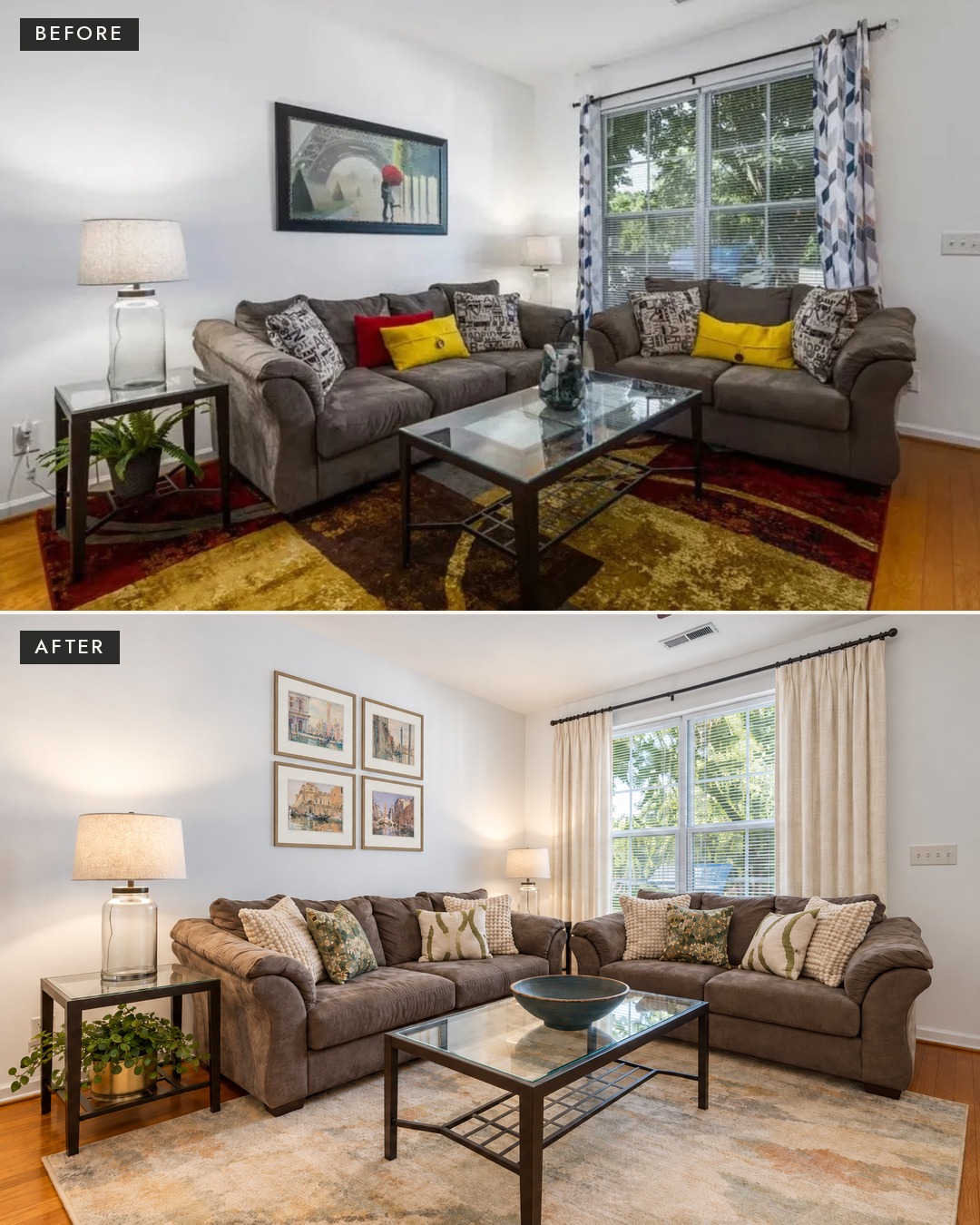
- You get a room plan: realistic images of your own rooms, redesigned, plus the steps to make them real, including the specific products we used when something new is worth buying.
- We check the final photos. Before your listing goes live, we review your agent’s professional photos and flag presentation issues that may need attention.
We work with the furniture you already own whenever possible. When something new would make a real difference, we recommend real, purchasable pieces, not imaginary furniture that only exists in a rendering. Use our picks or choose your own.
This isn’t conventional virtual staging, which digitally fills listing photos with things that aren’t in the house. The goal is a better room in your real house, so the photos and the showing tell the same story.
What Is a Better First Impression Worth?
Room plans start at $285 for three rooms, with additional options for more room plans. No design service can promise a faster sale or a higher offer, and we don’t.
Here’s a useful comparison instead: on a $400,000 home, a single 2% price reduction costs $8,000. A room plan is a small, upfront way to make better decisions before you spend money on changes, and before the first photos of your home go online.
You can’t guarantee that better presentation will prevent a price reduction. But before putting a $400,000 asset on the market, doesn’t it make sense to invest $285 in knowing how to present it?
Home Staging Checklist FAQ
When should I start staging my house to sell?
Ideally several weeks before listing, and before your agent’s first walkthrough, so there’s time to make changes without rushing to beat photo day.
Do I need to remove all personal items?
No. Remove most family photos and clutter, but a few well-placed pieces with character (art, an antique, a collected object) often make a room more appealing, not less.
Do I have to paint everything neutral?
Not necessarily. Dated or very bold colors can distract, but a rich color in the right room can be an asset. Lighting, rugs, and arrangement sometimes solve the problem without paint.
Is a room plan the same as virtual staging?
No. Virtual staging adds digital furniture to listing photos. A Magazine Worthy room plan shows how to improve your real rooms, mostly with what you already own, so the house buyers tour matches the photos they saw.
Before the photographer. Before the listing. Before the first impression.
Don’t leave your home’s presentation to a generic checklist.
Get My Room Plan — From $285Magazine Worthy · Personalized pre-listing room plans for homes that need to look their best, online and in person.