Virtual Staging vs. Staging Your Actual Home: What’s Better Before You Sell?
If you’re getting ready to sell, someone has probably already told you to stage. The next question comes fast: do you rent furniture and style the real rooms, or have the photos virtually staged for a fraction of the cost?
It’s a fair question, and the honest answer is that each one solves a different problem. Physical staging changes the house. Virtual staging changes the pictures. Buyers experience both, in that order, and the gap between the two is where a lot of listings quietly lose momentum.
Here’s how they compare, what each one gets right, and what neither one does on its own.
What each option actually is
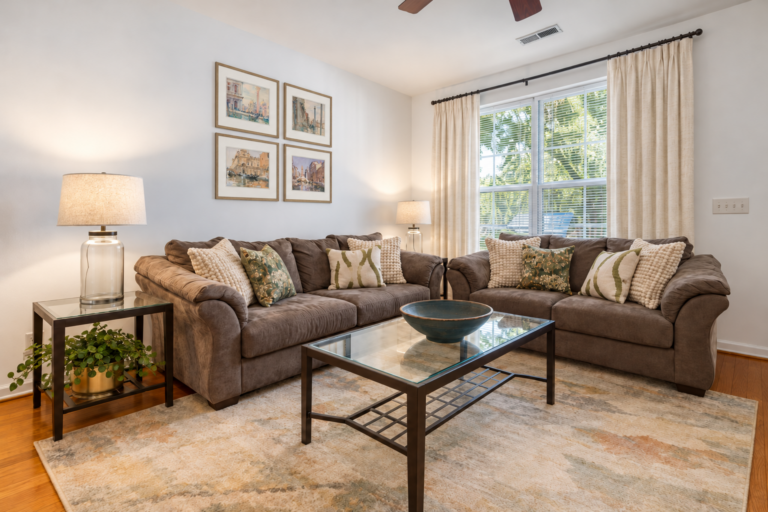
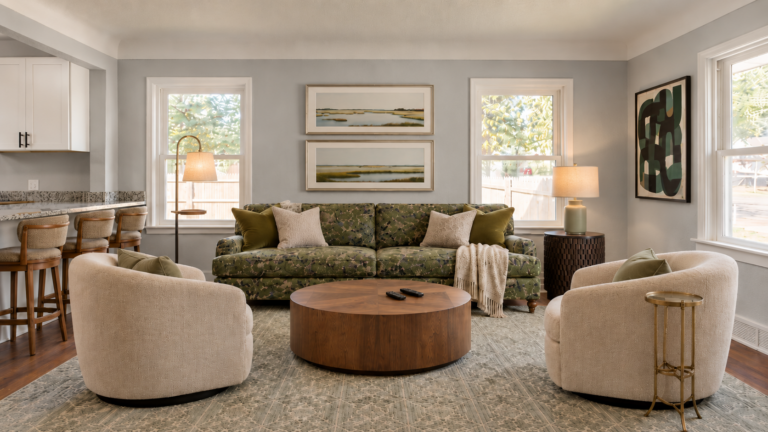
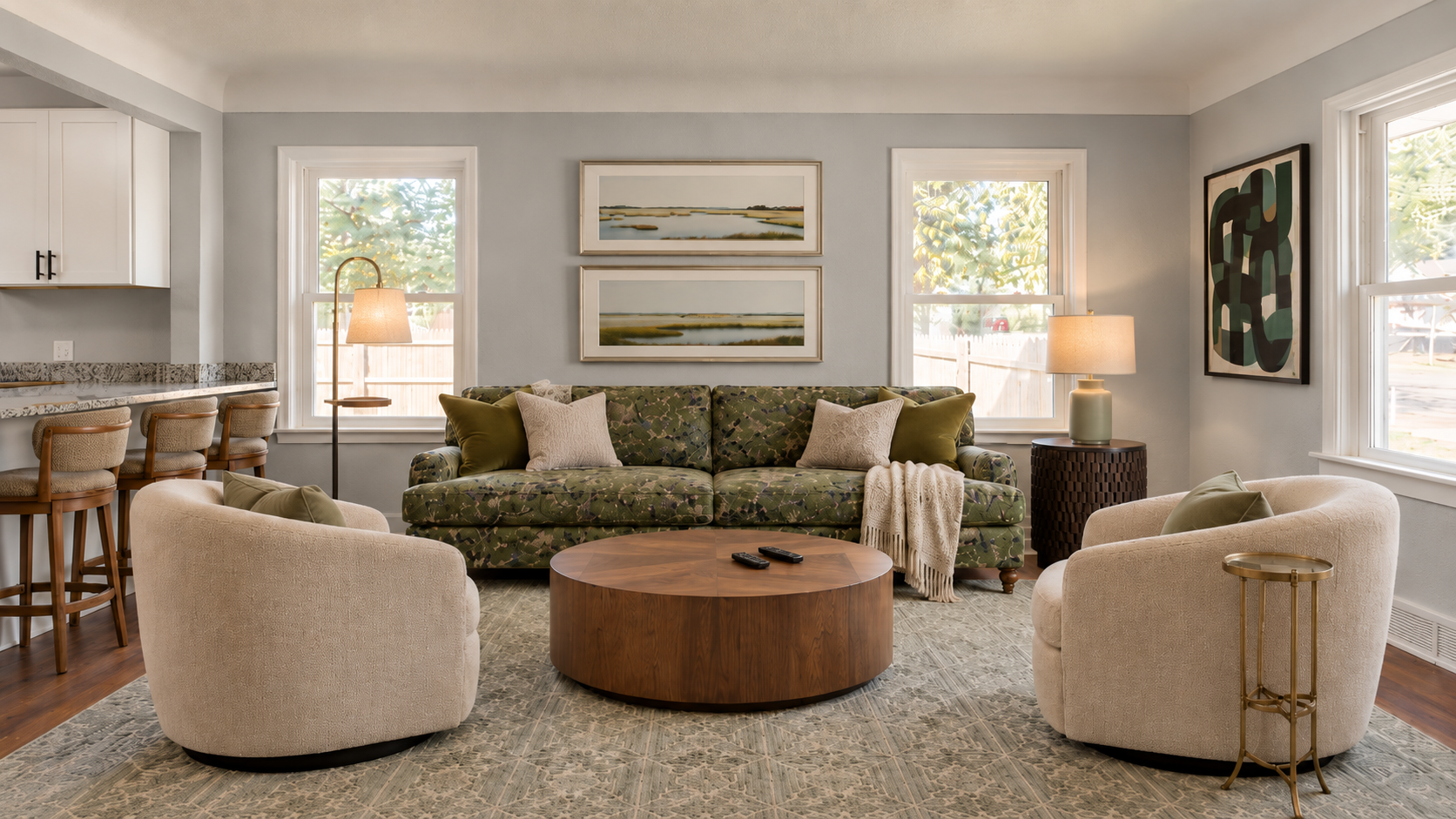
Physical staging means bringing real furniture, rugs, art and accessories into your home (or rearranging and editing what you already own) so the rooms look their best in photos and in person. A professional stager typically charges a design and installation fee plus monthly furniture rental for as long as the house is on the market.
Virtual staging means a designer or an AI tool adds furniture and décor to a photo of a room. Nothing in the house changes. It was built for empty rooms, and that is still where it works best.
Virtual staging vs. physical staging (and a third option) at a glance
| Physical staging | Virtual staging | Magazine Worthy room plan | |
|---|---|---|---|
| Typical cost | Roughly $800 to $3,000 for most homes; $2,000 to $6,000+ to furnish a vacant house | About $1 to $3 per photo with AI tools; $20 to $100 per photo with a human designer | From $285 for a 3-room plan ($95 per room) |
| Ongoing cost | Monthly furniture rental (often $500 to $2,000) after the first 30 to 90 days | None once the photos are delivered | None. You buy only the pieces the plan calls for, and you keep them |
| Time to ready | Days to weeks to schedule, deliver and install | Minutes to two days | Plan in hand before you list; changes made on your own schedule |
| What buyers see at the showing | The same rooms they saw online | Empty rooms, or your real furniture, instead of the rooms in the photos | The same rooms they saw online, because the changes are real |
| Occupied homes | Works, but often means packing up, storing and living around rented pieces | Awkward; digitally replacing your furniture creates a mismatch at the showing | Built for them. The plan starts with the furniture you already own |
| Disclosure | None needed | Usually required by the MLS, and by state law in some places | None needed. Your listing photos show real rooms |
| Best for | Vacant or higher-priced homes where the in-person experience carries the sale | Vacant homes on a tight budget, or showing what an empty room could be | Lived-in homes, especially those listing at $300,000+, where sellers want to know what’s worth changing |
| Biggest risk | Generic “model home” styling that costs a lot and says little about the house | Furniture that’s the wrong scale, rooms that drift from reality, and buyers who feel misled | It still takes your effort. The plan only pays off if you make the changes |
Physical and virtual staging cost ranges compiled from 2025–2026 figures published by NAR, HomeAdvisor/Angi and major virtual staging providers. Local prices vary.
Where physical staging wins
Real staging does something a photo can’t: it holds up when the buyer walks in. Rooms read at the right scale, the flow makes sense, and the house matches what brought the buyer there.
The data backs that up. In the National Association of Realtors’ 2025 Profile of Home Staging, 29% of agents said staging led to a 1% to 10% increase in the dollar value offered, and 49% of sellers’ agents said it shortened time on market. Buyers’ agents overwhelmingly said staging made it easier for buyers to picture the place as their future home.
The catch is the price and the clock. NAR reported a median cost of about $1,500 when a professional stager is hired, and rental keeps running every month the house doesn’t sell.
Where virtual staging wins
For an empty house, virtual staging is hard to beat on cost. An empty room photographs as a box: no sense of scale, no idea where the sofa goes, nothing to make anyone stop scrolling. A well-done virtual image fixes that for the price of a dinner out.
It’s also fast, it never needs to be picked up, and it can show a room’s possibilities, like a spare bedroom as an office.
But agents themselves are split on it. In the same NAR report, about a third of sellers’ agents rated virtual staging as less important than physical staging, while roughly a quarter considered them equally important.
Where both fall short
Here’s the part most comparisons skip. Physical and virtual staging share the same blind spot: both tend to default to a generic, neutral, inoffensive look. That’s fine for avoiding objections. It’s not the same as creating desire.
Buyers don’t fall for beige. They fall for a room that feels considered: the right scale for the space, a point of view, one thing that makes it feel lived in rather than rented. Plenty of staged homes are perfectly tidy and still forgettable.
Each option also has its own failure point:
- Physical staging can erase the house. Rented furniture packages are often chosen from what’s in the warehouse, not what the room needs.
- Virtual staging can promise a house that doesn’t exist. AI tools are built to produce an attractive image, not a faithful one. Furniture comes out oversized or undersized, windows shift, finishes change. The better the photo looks, the harder the letdown at the door.
- Disclosure cuts both ways. Most MLSs require virtually staged photos to be labeled, and some states, including California, now require it by law. A listing full of “virtually staged” tags tells buyers to expect empty rooms.
The occupied-home problem
Most sellers live in the house they’re selling. That’s where this whole debate gets messy.
Virtual staging wasn’t designed for furnished rooms. Digitally swapping out your sofa means buyers arrive to find your actual sofa, which is exactly the gap you were trying to avoid. Physical staging of an occupied home usually means packing up half of what you own and living around rentals for months.
For an occupied home, the most effective move is usually neither one. It’s editing and restyling what you already have, adding only what the room genuinely needs, so the photos and the showing tell the same story.
A third option: see it before you spend it
The smartest use of a virtual image isn’t putting it in the listing. It’s using it to decide.
That’s the idea behind our homeowner room plans. As Listing Presentation Designers, we work from your own phone photos and your own furniture, show you what each room could look like at its best, and tell you exactly what to change to get there: what to keep, what to move, what to add and where to buy it. You see the result before you spend a dollar on rentals or new pieces, and you make real changes so the house matches its photos when buyers walk in.
It’s the low cost and speed of virtual, with the in-person payoff of physical, and with design judgment instead of a default.
How to decide
- Your home is vacant and the budget is tight: Virtual staging is a reasonable choice. Hire a human designer rather than a one-click tool, insist the room stays true to its actual size and architecture, and disclose it.
- Your home is vacant and higher-priced, or in a slow market: Physical staging of the main rooms is often worth it. Buyers who drive out deserve to see what they saw online.
- You’re living in the home: Skip full rentals and skip virtual listing photos. Plan the rooms first, then restyle with what you have plus a few targeted additions.
- Whatever you choose: Put your effort where buyers look hardest. NAR’s report found the living room, primary bedroom and kitchen were the rooms where staging mattered most to buyers.
Frequently asked questions
Is virtual staging cheaper than physical staging?
Much cheaper. AI virtual staging can cost a few dollars per photo and designer-edited virtual staging typically runs $20 to $100 per photo, compared with roughly $1,500 or more for professional physical staging plus monthly rental.
Do I have to disclose virtual staging?
In most cases, yes. Most MLSs require virtually staged photos to be labeled, some states require disclosure by law, and the Realtor Code of Ethics prohibits misleading images. Your listing agent is responsible for following local rules.
Can I virtually stage a home I’m still living in?
You can, but it’s rarely a good idea for listing photos. Buyers will see your real furniture at the showing, not the furniture in the pictures. For occupied homes, restyling the real rooms usually does more.
Does staging really help a home sell?
According to NAR’s 2025 Profile of Home Staging, nearly half of sellers’ agents said staging reduced time on market, and 29% of agents said it increased the dollar value offered by 1% to 10%.
Before you rent a single sofa
The first person you have to sell your home to is your agent, and then every buyer after them. If you’d like to see what your rooms could look like, and know exactly what’s worth changing before you spend on staging, take a look at a sample room plan or order a room plan for your home.