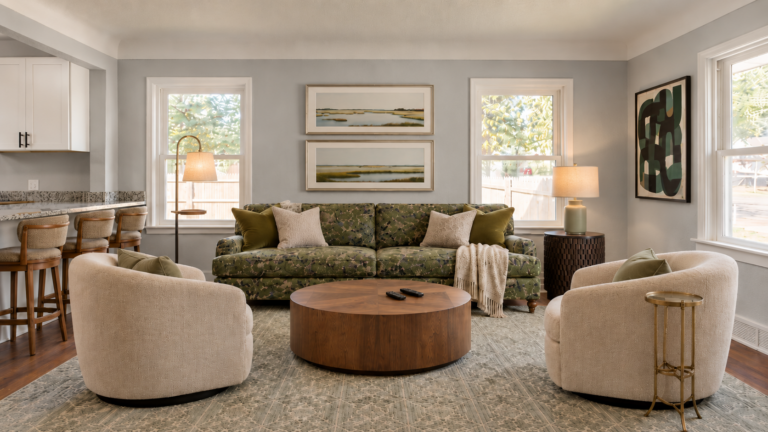
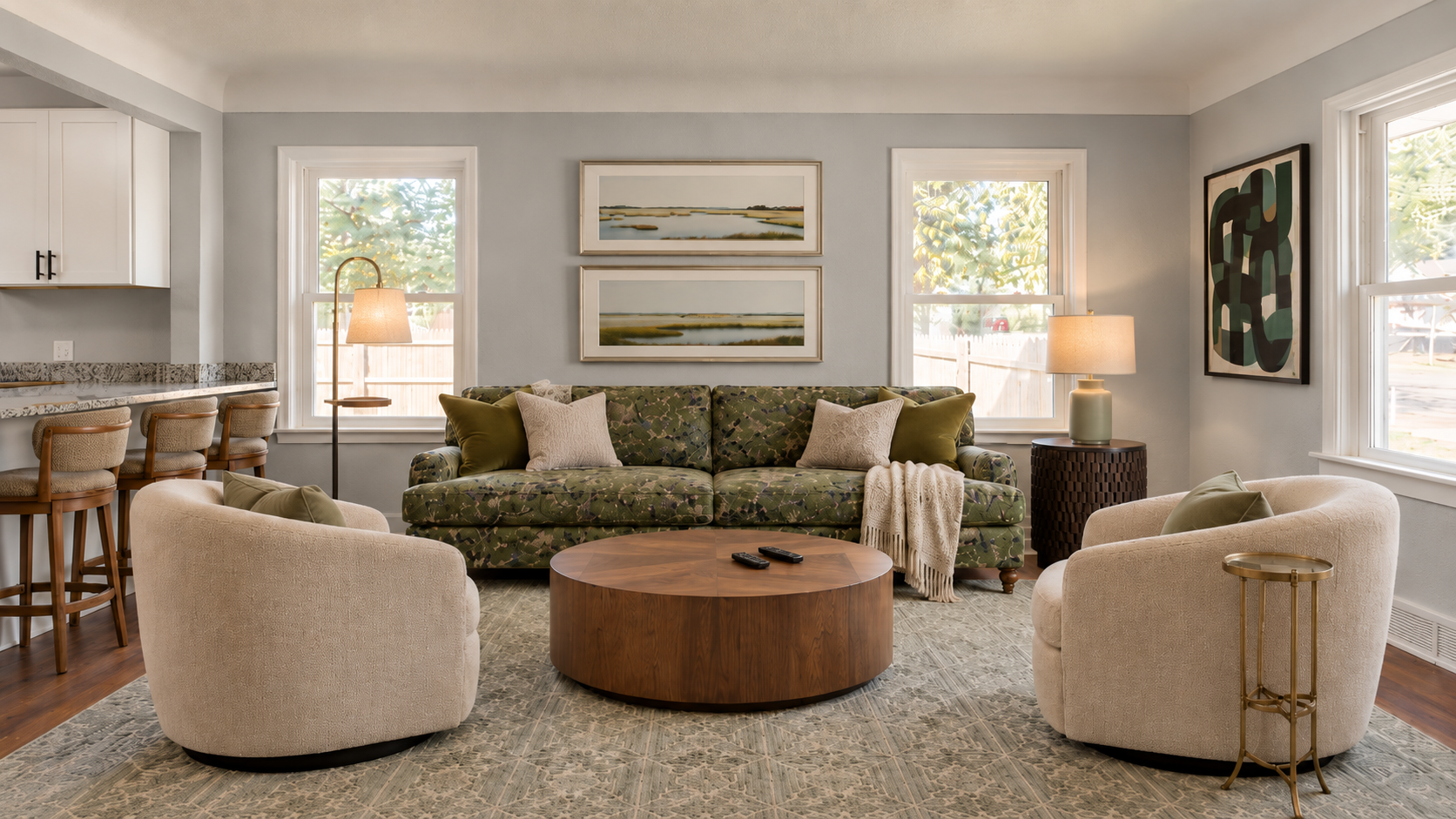
The Best Listing Photo Isn’t AI-Staged. It’s Thoughtfully Designed.
What buyers see online should be a room you can actually create.
You’ve probably seen it by now. Upload a photo of your living room to an AI staging app, and thirty seconds later it’s full of new furniture, fresh art and a perfectly placed plant.
It’s impressive. It’s inexpensive. And sometimes it’s completely imaginary.
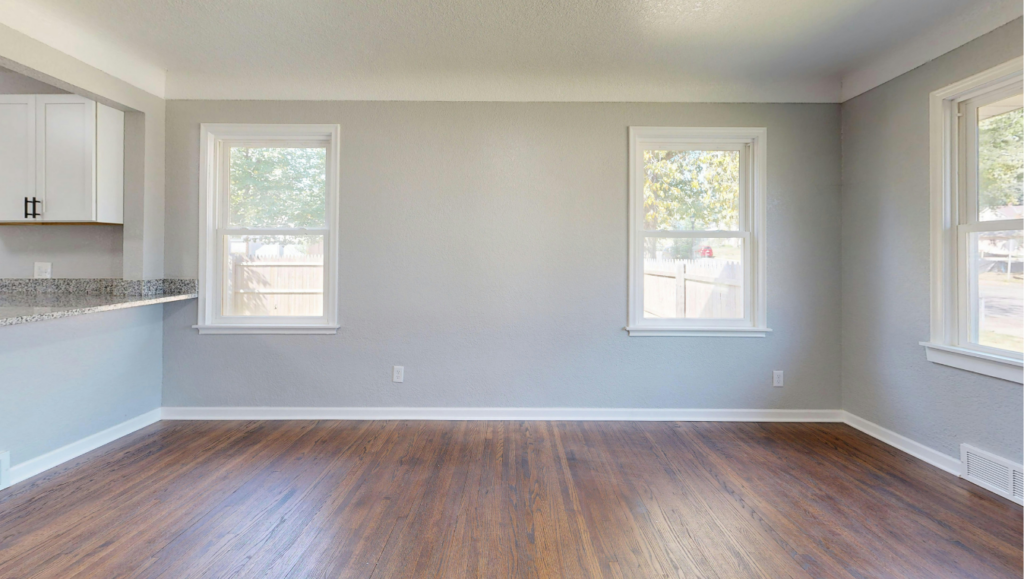
Buyers aren’t shopping for furniture
They’re shopping for a home, and imagining the life they could have there. A listing photo works when it helps the right buyer see themselves in the room.
A new sofa doesn’t do that on its own. A room that makes sense does: furniture sized to the space, a clear path through it, and the room’s best feature where the eye lands first.
What AI staging gets wrong
AI is good at filling space. It isn’t good at deciding what a room should say. Look closely at most AI-staged photos and you’ll find the same problems:
- It changes what can’t change. Windows get wider. Ceilings get taller. Floors switch from oak to tile. Those are the things that stay with your house.
- It furnishes for nobody. The same gray sofa, white throw and abstract print show up in a 1950s ranch, a brick colonial and a new townhouse.
- It shows a room you can’t get. The pieces don’t exist, at sizes that wouldn’t fit through your door.
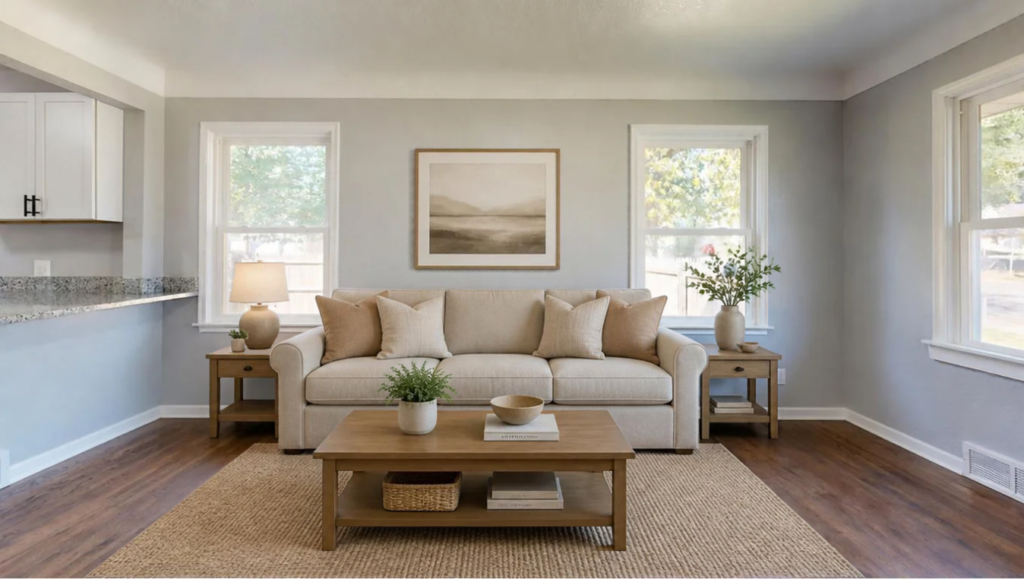
Then a buyer walks in and finds a different room than the one they clicked on. At that point the photo hasn’t helped you. It’s cost you their trust, and they haven’t even seen the kitchen.
What “thoughtfully designed” means
Before anything gets moved, someone has to decide who the room is for and what it should say. That’s the part software skips. A thoughtfully designed room:
- Starts with what you own. Most rooms need editing and rearranging more than shopping.
- Keeps what stays with the house exactly as it is: windows, floors, trim, fixtures, the view.
- Adds only what earns its place: the right size rug, a lamp where the room goes dark, one piece with a little history so the room feels lived in.
- Leads with the room’s best feature, whether that’s the fireplace, the light or the windows.
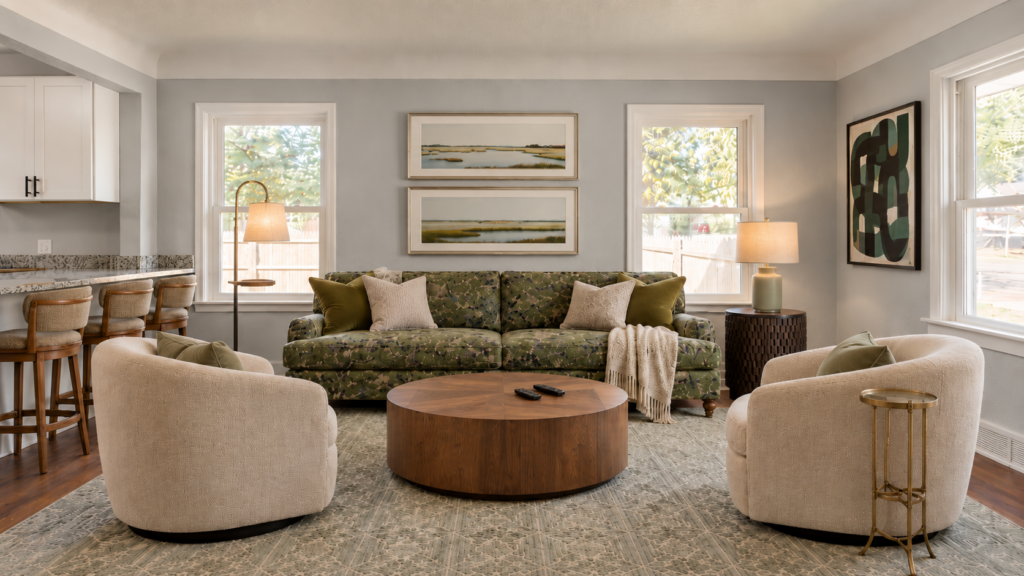
The result is a room you can create, not merely admire on a screen. When the photographer arrives, they photograph the real thing, and buyers find exactly what they came to see.
The first person you have to sell is your agent
Agents price what they see on the first walkthrough. If the rooms aren’t ready yet, a promise that they will be rarely makes it into the price.
That’s why the best time to do this is before you meet with an agent. Show them the house at its best from the first visit.
Where I come in
I spent fifteen years as founding editor of Chicago Home & Garden, deciding what rooms should look like before the camera came out. That’s the work I do now as a Listing Presentation Designer.
You send phone photos. I send back each room redesigned, with a plan: what to keep, what to move, what to remove, and anything worth buying. I use technology, including AI, to show you the finished room. But software doesn’t make the final design decisions. I do.
When your agent’s photos come back, I’ll review them before the listing goes live, at no extra cost, so the photos reflect the work you did.
See your rooms before you spend a dollar on them. Start with three rooms.