
Yes, a Listing Presentation Designer Is a Real Thing
Meet the listing presentation designer: a new way to get your home ready to sell.
You’re getting ready to sell. Does the living room need new furniture? Should you repaint? Is staging necessary? Everyone has an opinion, from your neighbor to your sister-in-law to the agent you haven’t hired yet. Before you spend a dollar, wouldn’t it help to see which changes actually matter?
That’s what I do.
What is a listing presentation designer?
A listing presentation designer looks at your home the way a buyer will first see it: in photographs. Then I show you how to make those photographs work harder.
I’m not a stager who brings in a truck of rental furniture. I’m not a decorator who redesigns your house for the next ten years. And I’m not the photographer, though I spent fifteen years working alongside them as the founding editor of Chicago Home & Garden, deciding which rooms were ready for the camera and which ones needed help.
The job sits before all of those people. I tell you what to change, what to leave alone, and what each room could look like, so you only spend money where it shows.
A room for the camera is not a room for living
This is the part most people don’t expect. The room that works for your family is often not the room that photographs well.
In real life, you need the extra chair for when the kids’ friends come over. You need the basket of blankets by the sofa and the mail on the counter. Your eye edits all of it out because you live there.
A camera doesn’t edit. It flattens the room into a rectangle and records everything with equal weight. The cord behind the lamp gets as much attention as the fireplace. A busy rug that feels cozy in person reads as chaos in a photo. A sofa pushed against the window blocks the very thing a buyer would fall for.
On a magazine shoot, we’d spend hours moving furniture inches at a time, pulling things out of the frame, and adding one or two pieces that told the room’s story. Buyers scrolling listings make up their minds in seconds, and the same rules apply.
How it works, from phone photos to a finished room plan
You don’t need a professional camera or a home visit. Here’s the whole process:
- You send phone photos. Two or three per room, taken from the doorway in daylight, plus rough measurements if you have them.
- I build your room plan. Within five days you get a redesigned view of each room and a written list of changes, in order of priority.
- You make the changes. Some take an afternoon. Some you’ll decide to skip, and the plan helps you identify which changes matter most.
- Your agent books the photographer. Once the professional photos come back, send them to me for a final editorial review before the listing goes live. I’ll flag any presentation issues within one business day. Photography corrections or reshoots are handled separately.
That last step matters more than people think. I’ve seen good preparation undone by one rushed photo session.
What I keep, what I change, and why
My first question about any room is: what can stay?
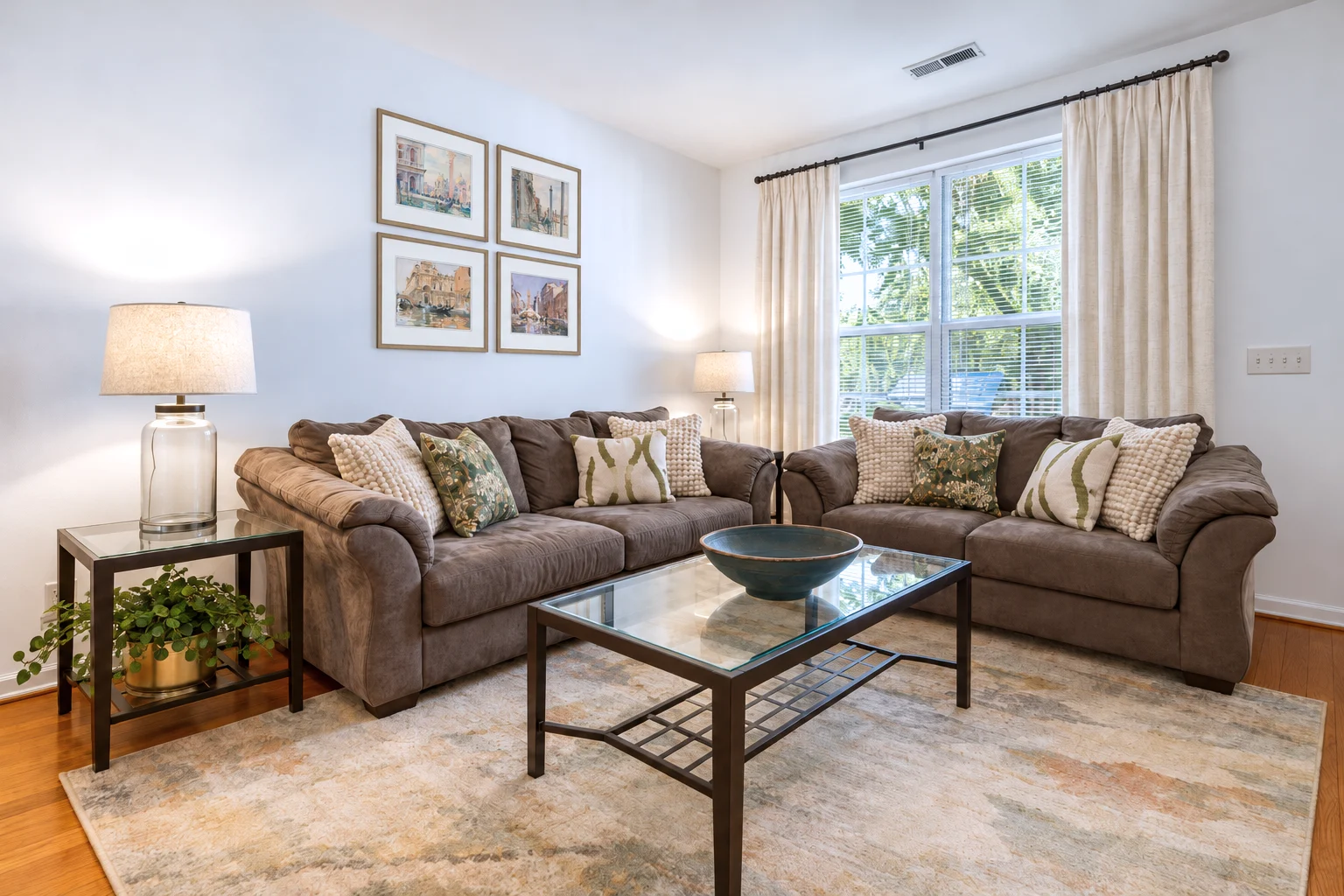
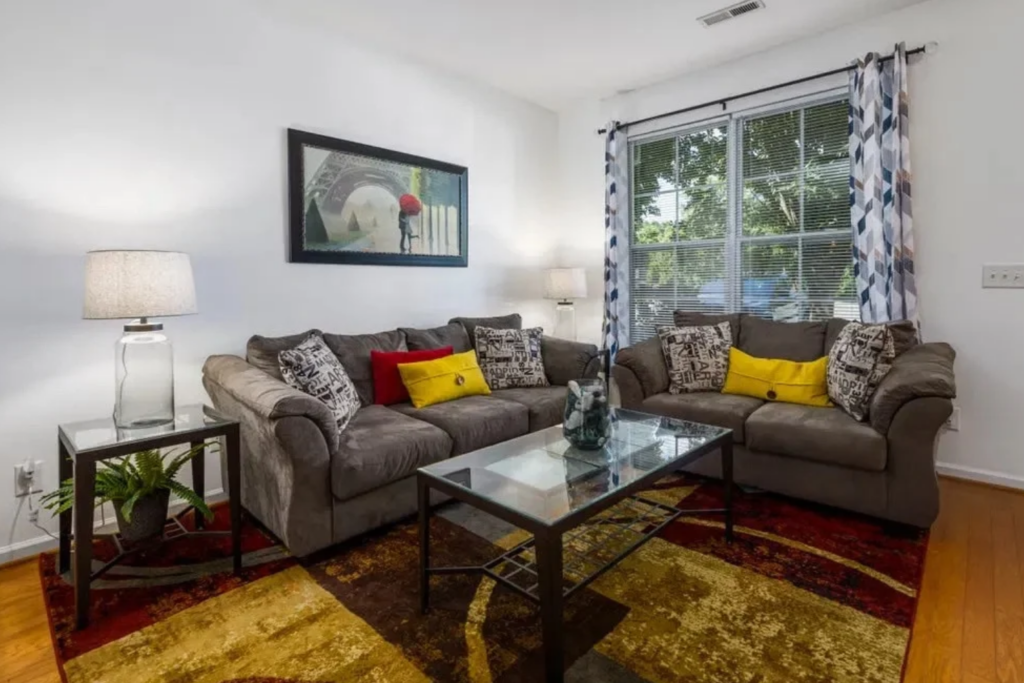
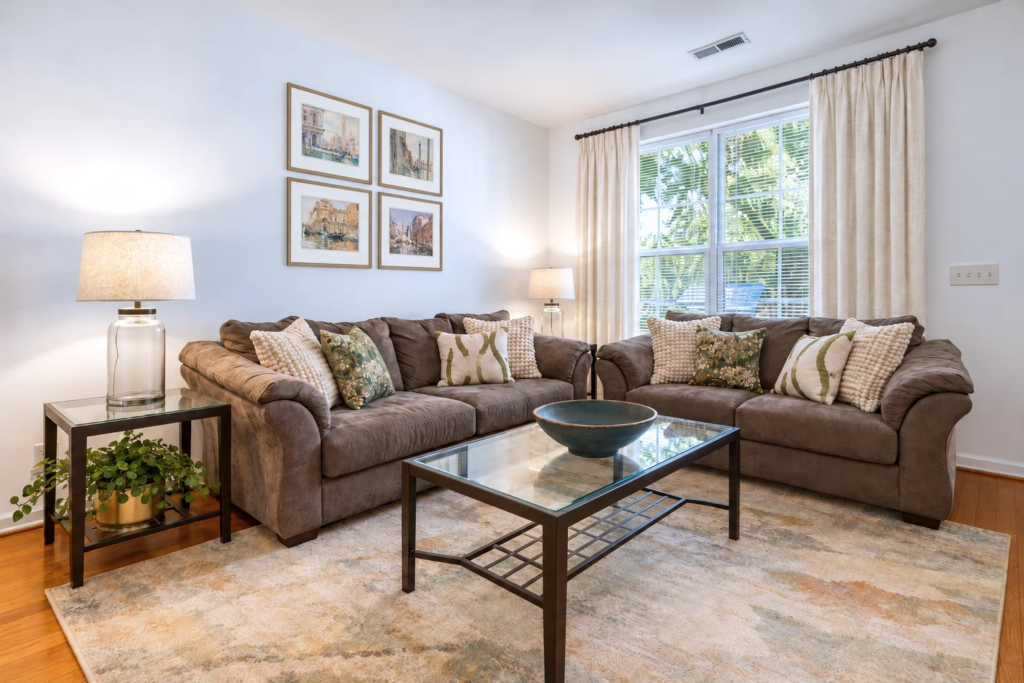
Take the living room at the top of this post. The owners had two gray microfiber sofas. They weren’t going to replace them before moving, and they shouldn’t have to. So the sofas stayed as did the coffee table, end tables and lamps. All attractive, in good shape and sized appropriately for the space.
Here’s what I proposed changing around them.
The rug did the heaviest lifting. The original was red, gold, and brown, with swirls that fought with everything else in the room. Replacing it in the visualization with a soft, low-contrast rug calmed the whole floor, and suddenly the sofas looked chosen rather than tolerated.
The pillows got a single palette. Red, yellow, and text-print pillows became cream, sage, and textured neutrals. The color comes from the yard outside the window, which ties the room to the view.
The art got smarter, not bigger. The owners loved a Paris print, so I kept the idea of European travel and gave it a better form: a set of four framed watercolors. The patterned curtains came down in the proposed design, and plain linen panels went up higher and wider, which makes the window look bigger.
The furniture you own is part of your house’s story. My job is to keep what works and fix the context around it.
Why realistic visualizations and real furnishings matter
There are plenty of apps that will “stage” a room in one click. Some look impressive at first glance. Look closer, and the windows have moved, the ceiling is higher, and the furniture is a size that doesn’t exist.
That’s a problem, because you can’t buy what the app drew. And if a buyer schedules a showing based on a picture of a room that isn’t real, they walk in feeling misled.
My designs are created around your home’s actual architecture, dimensions, and existing features—not an invented version of your house.
The furnishings I recommend are real, purchasable pieces selected to fit the room. You can buy the suggested items or choose something similar that works with the plan.
The goal isn’t an imaginary room that looks good on a screen. It’s a room you can actually create before the listing photographer arrives.
Preparing for the photographer without unnecessary expenses
Many of the changes that help a room photograph well cost almost nothing:
- Remove visual distractions. Start with counters, shelves, and tabletops. Anything competing with the room’s best feature deserves a second look.
- Turn on the lamps. Use bulbs with consistent color temperatures so the lighting feels cohesive.
- Hide cords. Tuck them behind furniture or secure them discreetly along baseboards.
- Open blinds and curtains. Let daylight into the room and reveal attractive outdoor views.
- Clear the floors. Pet beds, shoes, and laundry baskets go somewhere out of frame.
- Make beds neatly. Smooth the bedding, straighten the pillows, and give the room a finished appearance.
Then spend money only where your room plan says it counts. Sometimes that’s a rug or a pair of lamps. Often, it’s simply rearranging what you already own.
Before you spend thousands getting your home ready to sell, invest a few hundred in knowing what actually needs to change.
Magazine Worthy shows you what’s worth keeping, what needs attention, and how your rooms could look before the photographer arrives.
About the Author
Mary Semmer is the founder and former Editor-in-Chief of Chicago Home & Garden magazine. After fifteen years working with photographers, stylists, and designers to create editorial interiors, she founded Magazine Worthy to bring that same editorial judgment to homeowners preparing their properties for sale.