
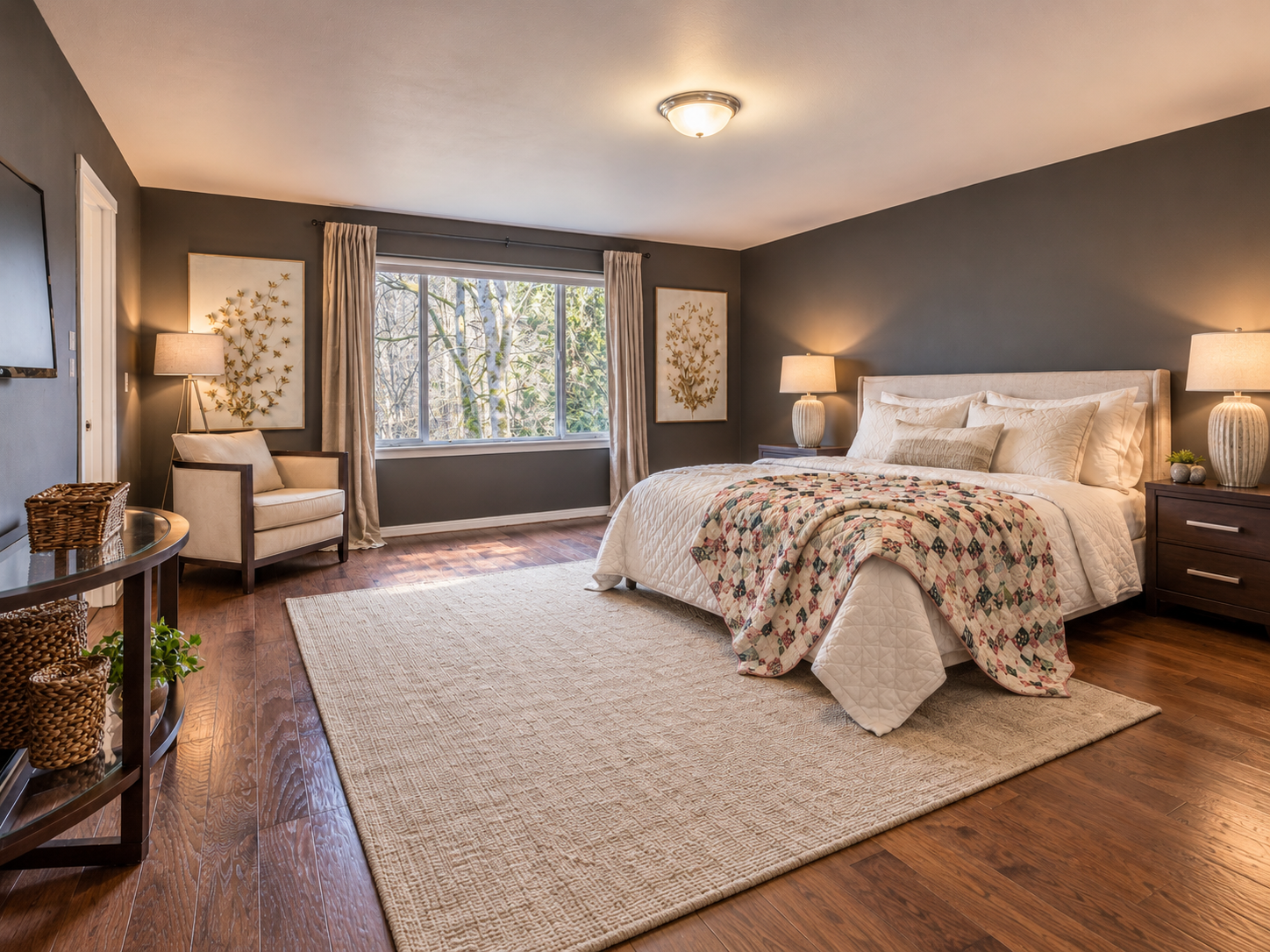
The Difference Between a Pretty Room and a Photogenic Room
A room can be lovely in person and still fall flat online. Here’s why, and how to make a room look good in photos.
Every homeowner has had this moment. You love your bedroom. It’s calm, the furniture is good, and nothing is out of place. Then you see a photo of it and think, that’s not what it looks like.
You’re right. It isn’t. And when you sell your home, that photo is the version buyers see first.
Your eyes edit. The camera doesn’t.
When you stand in a room, you’re doing a lot of work without noticing. Your eyes move. You look out the window and ignore the cords. You feel how soft the bed is, how quiet the room is, how the light falls in the afternoon.
A camera does none of that. It records everything at once, from one spot, in two dimensions. No warmth, no texture, no context. Just shapes, colors and whatever is sitting on every surface.
A pretty room is something you experience. A photogenic room is something you compose.
Where pretty rooms go wrong on camera
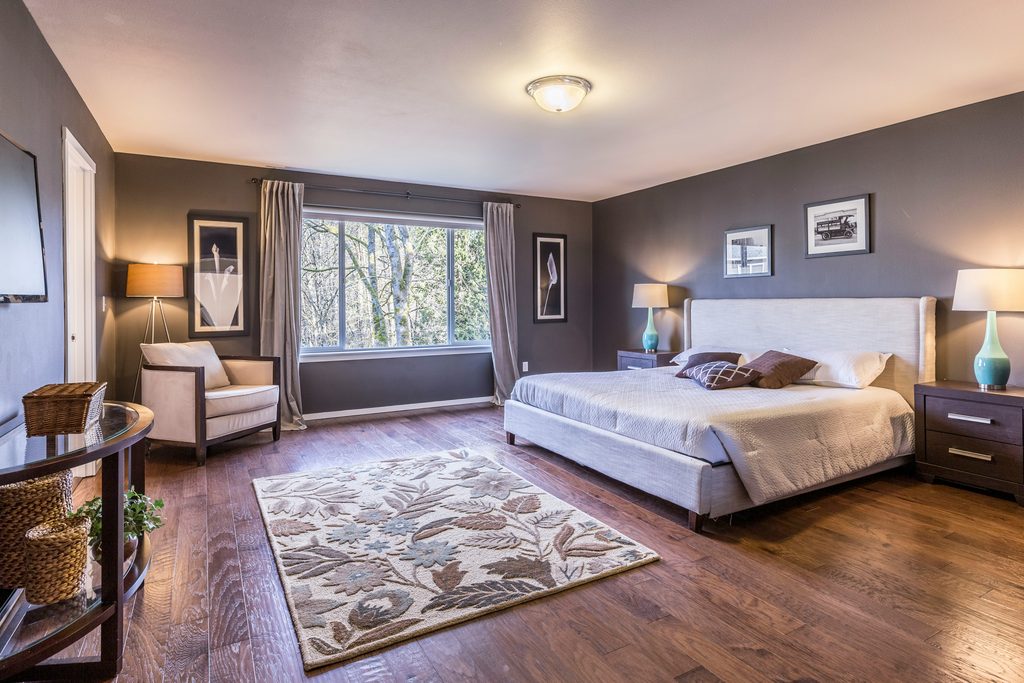
- Everything blends together. Gray walls, a gray bed and gray bedding feel calm in person. On camera they become one flat tone with nothing to look at.
- The art is too small. A few small frames look right when you’re standing near them. In a wide shot they shrink to postage stamps.
- Nothing has layers. A bed made with one flat comforter reads as a block. Texture, folds and stacked pillows are what make a bed look soft in a photo.
- Everything sits at one height. The bed, the nightstands and the lamps line up in one band across the middle of the frame.
- Small things become noise. The dish of change, the stack of books, the charger on the nightstand. In person they feel lived-in. In a photo they read as clutter.
- Color shifts. Soft gray can look cold. A few bright accents, like turquoise lamps, can look random instead of chosen.
What makes a room photogenic
On a magazine shoot, the first job is rarely the camera. It’s the room. Stylists rework the bedding, swap the art, pull objects off surfaces and shift a chair a few inches toward the lens, all in rooms that already looked beautiful.
The same thinking works for a listing:
- One focal point. Decide what the eye should land on first. In a bedroom, that’s almost always the bed.
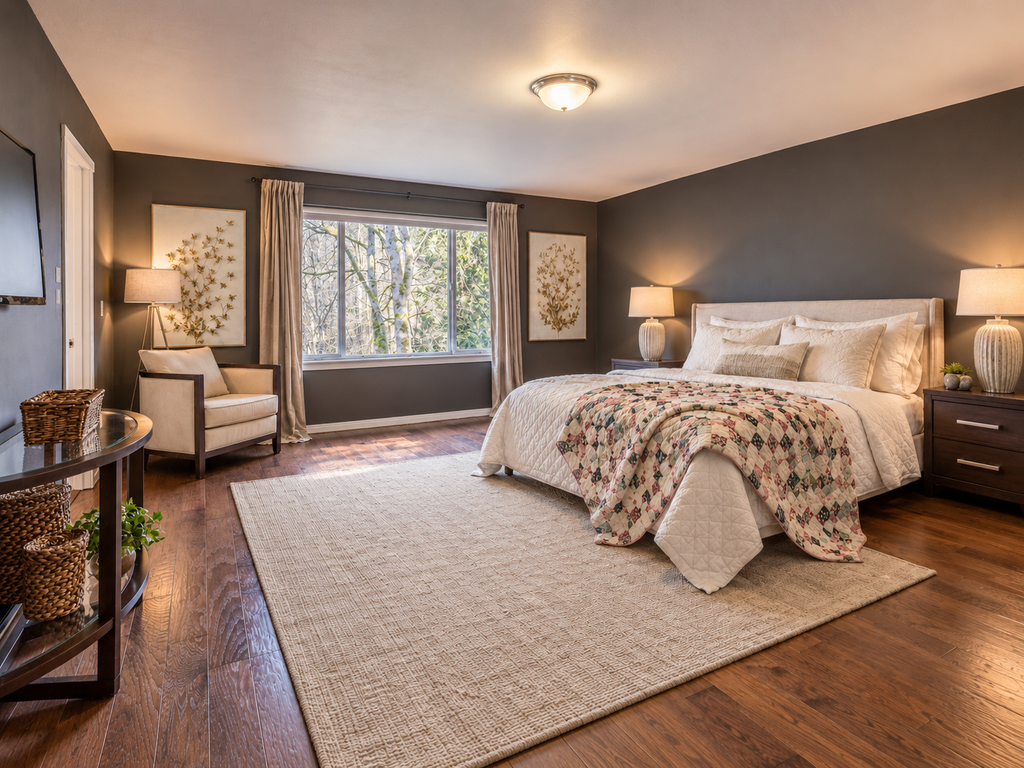
- Contrast. Light against dark, or dark against light. An ivory bed against charcoal walls stands out. A gray bed against gray walls disappears.
- Layers and texture. A quilted coverlet, a folded throw, pillows in a few sizes. Layers are what make a bed look like somewhere you’d want to sleep.
- Art sized to the wall. Fewer, larger pieces. One or two that fill the space beat a cluster of small frames.
- Lamps on. Warm light in the frame makes a room look lived in instead of empty.
- One piece with some history. An old quilt at the foot of the bed, a vintage lamp, something that wasn’t bought last week. It keeps the room from feeling like a hotel.
Photogenic isn’t fake
None of this changes your house. The windows, floors and walls stay exactly what they are. A photogenic room is the real room, edited for the one moment it gets judged: a buyer scrolling past it on a phone.
That’s also why it matters before the listing, not after. Agents price what they see at the first walkthrough, and the photographer shoots the room as it stands.
Where I come in
I spent fifteen years as founding editor of Chicago Home & Garden, deciding what rooms should look like before the camera came out. Now I do that for homeowners as a Listing Presentation Designer.
You send phone photos. I send back each room redesigned for the camera, with a plan for what to keep, what to move, what to remove and anything worth buying. Then you make the changes, and the room is ready when your agent walks in.
Find out what your rooms need before you meet with an agent. Start with three rooms.