Preparing Your Home for Sale: What to Do, What to Skip, and How to Know It Will Look Right
When you decide to sell, the to-do list arrives fast. Repaint everything. Redo the kitchen. Replace the carpet. Rent furniture. Most of it comes from good intentions, and a lot of it is money that buyers will never notice.
The homes that sell well aren’t always the ones with the most work done. They’re the ones where the right work was done: the changes that shape a buyer’s first impression, made with a clear eye for what each room actually needs.
Here’s how to tell the difference, using a real foyer as the example.
One foyer, before and after
This entry had good bones and a great piece of furniture. It also had small art hung too high, a rug the size of a doormat, a cluttered tabletop and nothing that made it feel like anyone’s home. It read as a hallway you walk through, not a welcome.
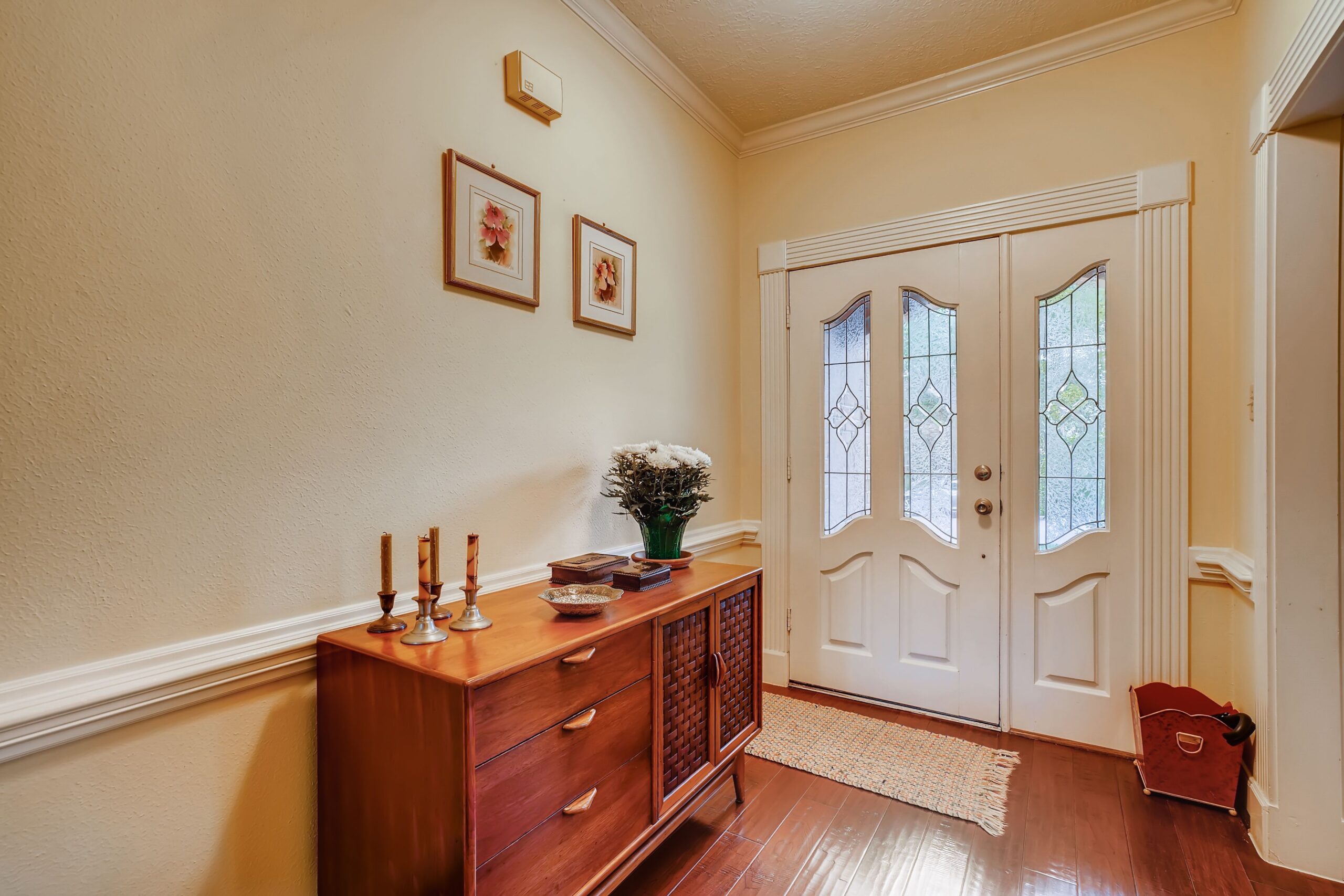
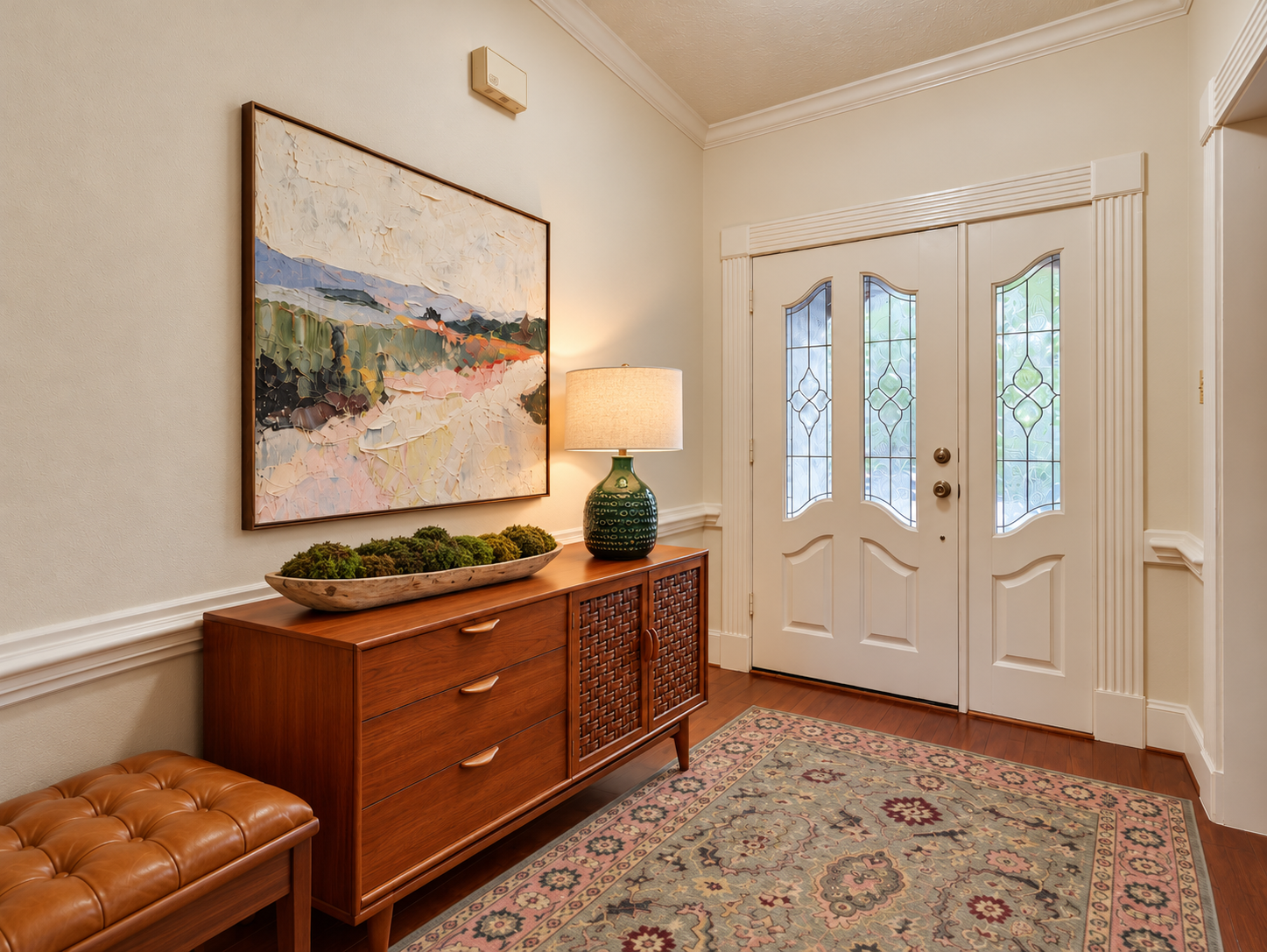
Same doors. Same trim. Same floor and ceiling. Same wall color. What changed is scale, light, texture and a sense that someone lives here. None of it required a contractor.
The foyer, decision by decision
| What | Decision | Why |
|---|---|---|
| Mid-century credenza | Keep | The best thing in the room. Everything else was rearranged to make it the star. |
| Two small framed prints | Replace | Too small for the wall and hung too high. One large textured painting, hung low enough to relate to the credenza, gives the wall presence. |
| Small rag rug | Replace | A rug large enough to sit under the credenza’s front legs unifies the space, softens the glossy floor and quiets the echo. |
| Candlesticks, boxes, dish, planter, bin | Remove | Many small things read as clutter. A few larger, deliberate pieces read as a decision. |
| Lighting | Add | A ceramic table lamp adds warmth, a dark anchor and a glow that photographs beautifully. |
| Something living | Add | Moss in an old wooden bowl brings life and texture to the other end of the credenza. |
| A bench | Add | Gives the foyer a purpose: a place to sit, put on shoes and set down a bag. |
| Wall color | Skip | The cool sage in the rug and the painting balance the warm walls. Repainting would have been nice, not necessary. |
| Textured ceiling, front door, floors | Skip | Expensive and disruptive, and none of them change how the room reads as much as scale, light and texture do. |
What each photo tells a buyer
A foyer is usually one of the first photos in a listing, and the first room anyone sees at a showing. Buyers don’t read it as a hallway. They read it as a preview of how the whole house has been lived in and cared for. In a few seconds, it answers a question they never say out loud: is this home worth the asking price?
The before says: a pass-through no one thought much about. Small prints hung high, a tabletop of odds and ends, a doormat-sized rug on a shiny floor and a bin in the corner. Nothing is wrong, exactly. But nothing tells a buyer what it would feel like to come home here. And when an entry looks like an afterthought, buyers start to wonder what else was. That’s how a home gets mentally discounted before anyone reaches the kitchen.
The after says: this home is cared for, and someone with taste lives here. The lamp is on, so it feels like a welcome rather than a corridor. There’s a place to sit, a place to drop your keys and something living on the credenza. The rug, painting and furniture feel chosen together, which signals that the rest of the house got the same attention. That’s the impression that supports the price, and it’s the one that makes a buyer scrolling through listings want to see the rest in person.
That’s the real job of preparing a home for sale. Not doing more, but making sure each room sends the right message about the house.
What to do before you sell
The changes that matter most are the ones that shape a first impression, online and at the door. Most cost far less than a renovation.
- Edit before you add. Clear every surface, then put back only what earns its place. Many small objects read as clutter in photos even when the room feels tidy in person.
- Fix the scale. Art that’s too small, rugs that float and lamps that disappear make a room feel unfinished. One right-sized piece does more than three small ones.
- Find your best piece and build around it. Most homes already own something worth featuring. Arrange the room so the eye lands there first.
- Layer the light. Overhead light alone flattens a room. A lamp or two adds warmth in person and glow in photos.
- Give each room a purpose. A bench in an entry, a chair and lamp in a corner, a desk in a spare room. Buyers respond to rooms they can picture using.
- Add one living thing. A plant, branches or moss keep a room from looking like a showroom.
- Repair what buyers will notice. Dead bulbs, sticky doors, scuffed trim, dripping faucets and loose hardware all signal deferred maintenance.
What to skip
- Big remodels right before listing. A rushed kitchen or bath renovation rarely returns what it costs, and buyers may not share your taste anyway.
- Replacing things that work. A sound front door, a dated but intact ceiling or a floor with ordinary wear can usually stay.
- Repainting everything by default. Paint is worth it where the color is a real problem or the walls are damaged. Otherwise, the right rug, art and light can shift how a color reads.
- Renting a house full of furniture while you still live there. Restyling what you own, plus a few targeted additions, usually looks more natural and costs far less.
- Buying before you have a plan. The most expensive mistake is a stack of purchases that don’t work together once they’re in the room.
How to know it will look right
This is where most sellers get stuck. You can buy the rug, hang the art and move the furniture, and only then find out whether it works. By that point the money is spent.
It matters more than it seems, because the first person you have to sell your home to is your agent. Agents form their opinion of a home, and often its price, at the first walk-through. If the house doesn’t look its best that day, promises about what you’ll fix later rarely carry the same weight.
Two ways to get ahead of it:
Use your phone as a test. Photograph each room from the doorway, the way a listing photographer would. The camera is less forgiving than your eye. Clutter, art that’s too small and dark corners show up immediately. If a surface doesn’t look good in the photo, it won’t look good in the listing.
See it before you spend it. That’s what our homeowner room plans are for. As Listing Presentation Designers, we work from your phone photos and the furniture you already own. You see each room at its best before you buy anything, along with exactly what to keep, what to move, what to add and where to find it. The foyer above is that process: same house, better presentation.
Frequently asked questions
What should I fix before selling my house?
Focus on what buyers will notice in photos and at the first showing: clutter, scale problems with art and rugs, poor lighting and visible maintenance issues like dead bulbs, scuffed trim or leaky faucets. These usually matter more than big renovations.
What should I not fix when selling a house?
Skip major remodels right before listing, replacing features that still work, and cosmetic projects that don’t change a buyer’s first impression. A dated but sound ceiling, door or floor can usually stay.
Do I need to repaint before selling?
Not always. Repaint where a color is genuinely off-putting or walls are damaged. In many rooms, the right rug, art and lighting change how the existing color reads without a paint project.
How do I know if my rooms will look good in listing photos?
Take a photo of each room from the doorway with your phone. The camera exposes clutter, scale problems and dark corners your eye tends to forgive. For a clearer picture, a room plan shows you what each room could look like before you spend anything.
Before you start buying
The best pre-sale work isn’t the most work. It’s the right work, in the rooms that make the first impression. If you’d like to see what your rooms could look like and know exactly what’s worth changing, see a sample room plan or order a room plan for your home.